How Long Should a Live Band Play at a Wedding Reception?
There is no single number, because "live band" covers different jobs. A cocktail group is built to accompany conversation, with a soft, acoustic sound that stays in the background of the day. An orchestra or a DJ-Live is built to fill the room with energy. They do not play for the same length of time, and they do not play at the same moments.
Once you know which one you are booking, the timing becomes straightforward. Here is how it works for each, with realistic hours you can adapt to your own day.
How Long Does a Cocktail Band Play?
A cocktail band is the most flexible group you can hire, because it can play at several points in the day. It can play at the ceremony, during the cocktail hour, and through dinner. You can book one moment, two, or all three.
If the group plays at your ceremony, it usually performs a few songs while guests take their seats. It then marks the entrances of the groom and the bride, and plays at a few key moments: after a speech, at the exchange of rings, and as the newlyweds leave at the end. A ceremony like this typically takes about thirty minutes of music.
The cocktail hour follows, and it generally lasts about an hour. This is the classic moment for a cocktail band, when guests are arriving, talking, and having their first drink.
Then comes dinner, and this is where a cocktail group is often underused.
Why Should a Cocktail Band Also Play During Dinner?
Because it is close to ideal. A cocktail band does not play loudly. That means guests can eat in peace, with a beautiful live musical accompaniment, and still hear each other perfectly. The music does not cover the conversation. It sits underneath it.
A recorded playlist can do the same job, but it does not give the room anything to look at or listen to. A group with a singer, a double bass and a guitar gives dinner a presence that a speaker cannot. If you want to see what this looks like in practice, you can read more about live music for the cocktail hour.
Dinner itself runs about an hour and forty five minutes. The band begins once everyone is seated and stops when the plates are cleared, so the dance floor can take over.
What Does a Full Cocktail Band Timeline Look Like?
Put together, a day with a cocktail band playing from start to finish might look like this:
- Ceremony, 5:00 pm to 5:30 pm: music while guests are seated, the entrances, the key moments and the exit.
- Cocktail hour, 5:30 pm to 6:30 pm: one hour of live music while guests mingle.
- Dinner, 6:45 pm to 8:30 pm: the band plays once every guest is seated at the table, and until the end of the meal.
That is roughly three hours of music, spread across three different moments, with breaks in between. Once dinner finishes, the cocktail band hands over to the DJ, or to a group built to make people dance: an orchestra or a DJ-Live.
Ask about a cocktail band for your ceremony, cocktail and dinner
What Is a DJ-Live, and How Does It Compare to an Orchestra?
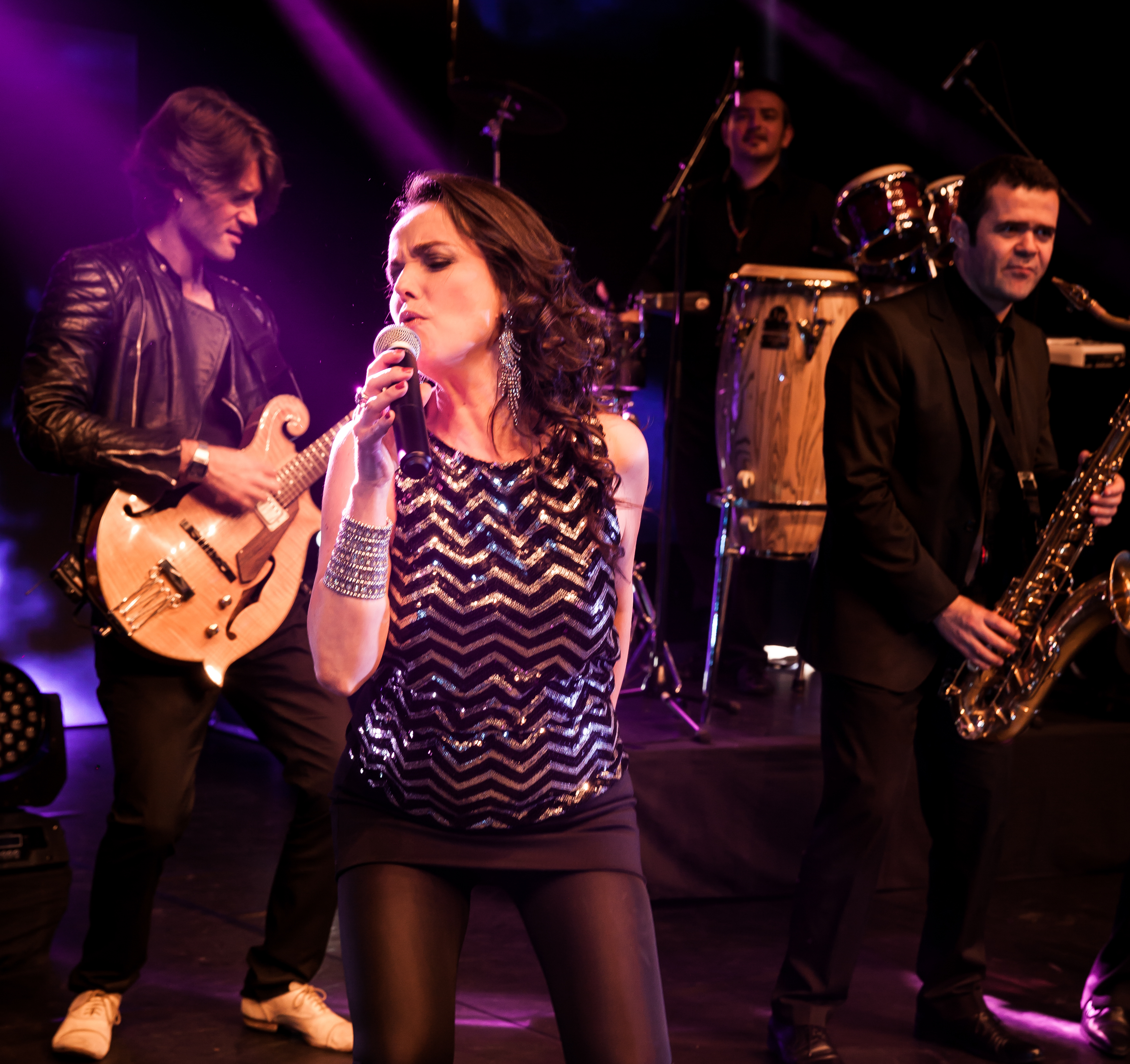
Before going further, a quick reminder of what a DJ-Live is. It is a DJ working together with musicians and singers, which together act as a small orchestra. Nourith sings live, joined by a DJ, other singers, saxophone and percussion. The music itself is played by the DJ, while the singers and musicians perform live on top of it.
The result has the presence of a live group without the space and the equipment a full orchestra demands. A full orchestra, for its part, is eight to twelve artists on stage with a drum kit, electric instruments and powerful sound. Both are built for the same purpose: to fill your dance floor. You can see how the DJ-Live works on the page about our formulas.
How Long Does an Orchestra or a DJ-Live Play?
If your group is the one that leads the dance floor, whether it is an orchestra or a DJ-Live, the shape of the evening is different from the cocktail band's. It is not only about the dance floor. The group can also animate the entrance of the newlyweds and the dinner. The sequence usually runs like this.
The orchestra or the DJ-Live plays for the entrance of the newlyweds into the room. During dinner, it can offer ballads and soft songs, as long as they do not disturb conversation. The other option is simply to play background music, and this is up to you as a couple.
Then the group returns to the stage for the first dance, the father and daughter dance, and the mother and son dance. After that, it takes over the dance floor with all the guests, for one hour and a half to two and a half hours in a row.
At the end, if you want to go further, the orchestra or the DJ-Live can play the last dance, or hand over to a DJ for an after party.
Summarized in hours, an orchestra or a DJ-Live can be present from the entrance of the guests into the room, around 6:30 pm, and play without interruption until 11:00 pm, when the last dance is played. That covers the arrival of the newlyweds, the dinner and the whole dance floor, not only the dancing.
Does an Orchestra or a DJ-Live Really Play Non-Stop?
Yes, and this is exactly why a serious orchestra works with several singers. A full orchestra includes three singers, so they can take turns at the microphone and rest their voices while the music keeps going. Sometimes the group plays non-stop in this way from the entrance of the guests at 6:30 pm until 11:00 pm, the end of the dance floor. The room never has a gap.
Whatever the format, the goal is the same: play songs that your guests know and love, so the dance floor stays full from the first song to the last. An orchestra or a DJ-Live can be technically excellent and still lose a room that does not recognize the music. Familiar songs, played with real energy, keep people on their feet.
You can see what a full lineup looks like on the page about a live wedding band in France.
Is Two and a Half Hours Too Long for an Orchestra or a DJ-Live?
It can be. Two and a half hours of continuous playing on the dance floor is a long stretch, and it asks a lot of both the performers and the audience. This is why there is a second option worth considering.
The best duration for an orchestra or a DJ-Live on a dance floor is about an hour and a half. This is a length during which musicians and singers can give their maximum energy without tiring, and interact properly with the room. Beyond that, fatigue begins to show. A group that is asked to play for two and a half hours straight is working harder, and the guests on the dance floor feel it too.
What Is the Option of an Orchestra or DJ-Live Followed by a DJ?
Instead of one long set, you can ask the orchestra or the DJ-Live to play for an hour and a half to two hours, and then switch to DJ mode for an hour. The main advantage is the change of atmosphere. A dance floor with a live group does not feel the same as a dance floor with a DJ, and your guests get to enjoy both.
There is a musical advantage as well. A DJ can change style and play more modern songs than an orchestra can, which gives your guests a wider range across the night.
There is also a practical advantage. We have a DJ we can offer for this part of the evening, so there is no need to book a separate DJ provider just for the end of the night. One team, one contact, one schedule, from the first song to the last.
Tell us how long you want the dance floor to run
Does the Length of Play Affect the Price?
Yes, as with any booking, a group of several people playing longer is priced differently from a single DJ. This is one more reason the handover to a DJ works well: the group plays where its energy and presence matter most, and the DJ carries the rest of the night.
How Late Can the Evening Go?
That depends entirely on when you want your wedding to end. After the orchestra or the DJ-Live set, our DJ can play for as long as you need, and the evening can go until three in the morning if you want. The time is yours to decide.
The last dance is the moment that usually closes the live part of the evening. In the timeline above, it falls around 11:00 pm. If you want the party to continue after that, the DJ takes over and the dance floor stays open.
How Should You Choose the Right Duration for Your Wedding?
Start with the three decisions that shape everything else.
First, what do you want from the cocktail group? If the answer is a warm musical presence from the ceremony to the end of dinner, plan for around three hours of music, split across three moments. If you only want it for the cocktail hour, one hour is enough.
Second, what kind of dance floor do you picture? A single long set from an orchestra or a DJ-Live feels like a concert that never stops. A shorter set followed by a DJ feels like two parties in one. Both are valid. The second is often easier on the musicians and more varied for the guests.
Third, when do you want the evening to end? Work backwards from that time. If the dance floor opens at 8:30 pm and you want to finish around 11:00 pm, an orchestra or a DJ-Live of an hour and a half, followed by a DJ for the rest, is a very natural structure. If you want to continue until three in the morning, the DJ is the one who will carry you there.
A good group will help you build this schedule. It is part of the conversation before the wedding, not something to improvise on the day.
In Practice
A cocktail band can play for three hours across the ceremony, the cocktail and the dinner, with breaks between each moment. An orchestra or a DJ-Live can accompany your evening from the entrance of your guests at 6:30 pm to the last dance at 11:00 pm, with the dance floor itself working best at about an hour and a half, and up to two and a half hours when the singers share the work. A DJ can then take over for the rest of the night.