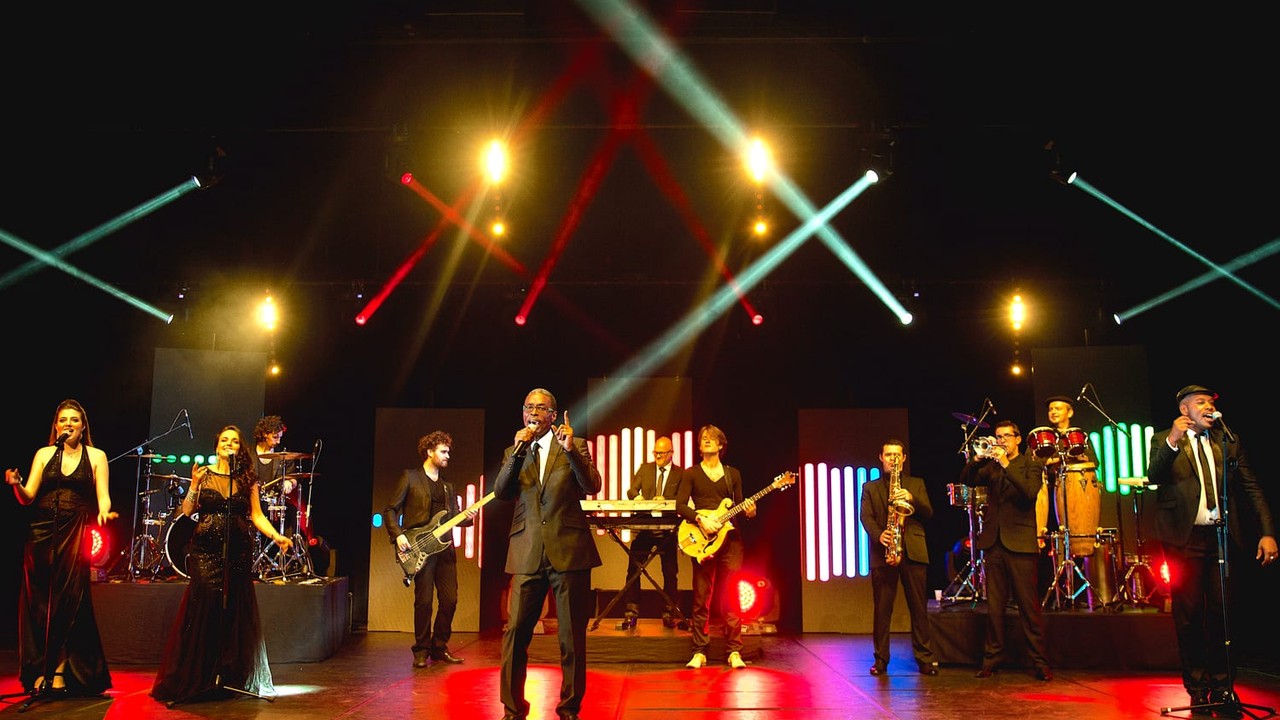
Is it better to have a DJ or a live band at your wedding? It depends on your budget, the space available in your venue, your guest count, and above all the atmosphere you want to create. Neither option is objectively better. Each serves a different kind of evening, and a third format, DJ-Live, often answers what couples are actually looking for better than either extreme.
Is It Better to Have a DJ or a Live Band at Your Wedding?
This is one of the first questions couples ask once they start planning their wedding music, and it rarely has a single right answer. A DJ and a live band solve different problems. One is about flexibility and simplicity. The other is about spectacle and presence. Choosing between them means being honest about what your venue can hold, what your budget allows, and what kind of evening you are picturing for your guests.
There is no format that suits every wedding equally. A couple planning an intimate dinner for forty guests in a small Parisian venue is not making the same decision as a couple hosting two hundred people in a chateau with a proper stage. The right answer changes with the room, the budget, and the mood the couple wants to build, which is exactly why this question deserves a real answer rather than a generic recommendation.
Most couples, in my experience, already have a fairly precise sense of their venue before they even reach out. They usually know the size of their room, and they can already estimate roughly what kind of stage it can hold and how many performers can realistically fit. It is rare for a couple to request a full band and only discover afterward that there is not enough space. That groundwork tends to happen naturally, on their side, before the conversation about format even starts, which usually means our first conversation is less about ruling things out and more about choosing between real options.
What Does a DJ Actually Offer?
A DJ takes up very little space, which makes this option workable in almost any venue, from an intimate dinner to a large reception hall. The main advantage is choice: a DJ can play virtually any song, in its original recording or in a remix, without being limited by what musicians can perform live. If a couple requests a song that exists only as a studio recording, a DJ can simply play it. That flexibility is genuinely valuable for a mixed, international guest list, where musical tastes can vary widely from one generation or one side of the family to the other.
The setup is also simple, with far less infrastructure than a full band, which keeps costs down. Hiring a DJ alone typically starts around 2,500 euros, making it the entry point for wedding entertainment. Here is what that entry budget covers, hour by hour. At that same figure, my own format adds live singing through the cocktail, which is worth knowing before comparing two quotes that look identical on paper. For a couple working with a tighter budget, or a venue that genuinely cannot accommodate a stage, this is often the most sensible choice, and there is nothing wrong with choosing it. It is simply a different kind of evening.
The trade off is presence. A DJ does not fill a stage. There is no visual spectacle, no live performers moving through the room, and in the best case, some light hosting between songs. On its own, a DJ is not exceptional. It is a baseline. A DJ is also, by the nature of the job, focused on mixing, somewhat in a bubble of their own, managing transitions, reading the room's energy, and adjusting the playlist in real time. That focus is exactly what makes a DJ reliable, but it also means the role does not naturally extend into hosting or interacting with guests the way a performer on stage does. What a DJ alone does not bring is human warmth and the sense of occasion that comes from watching real performers on stage, or from those performers actually engaging with the room.
Tell me about your venue and I will tell you what fits it.
What Does a Live Band Actually Offer?
A live band is the opposite experience. With eight to twelve musicians and singers, real instruments, and a full stage presence, it is genuine spectacle. This comes with real requirements: a stage of at least 5 meters by 4 meters is needed, which is not always available in every venue. The budget reflects that scale too, starting at 12,000 euros. This is not a small commitment, and it is worth understanding clearly why the price sits where it does before comparing it to other formats.
A live band is not a jukebox. No serious band can perform any song a guest might think of on the spot. Instead, a well run band offers a repertoire of roughly 100 to 200 songs that the singers and musicians know well, and couples choose around fifty of those for their event. That process of narrowing down a shared repertoire is part of the preparation itself, and it is where a couple's taste actually shapes the evening, long before the wedding day arrives.
It is worth loving the singers themselves, because they are the ones interpreting every song. They are not the original artists, but a great singer performing live, in the room, for your guests, brings something no recording can. There is a particular energy in watching a song built in real time, by real musicians reading the room, that a track played through speakers simply cannot replicate. To see what a full live lineup looks like in practice, visit the live wedding band page.
A live band also asks for something a DJ-Live format does not: rehearsal. Musicians and singers need to build cohesion together before the event, since nothing is prerecorded, and that musical unity has to be created from scratch for each lineup. This is one of the reasons a live band represents considerably more preparation work on my side than a DJ-Live evening. Assembling the right musicians, agreeing on arrangements, and making sure the group performs as one, rather than as a collection of individually talented players, takes real time before a single note is played for guests.
What Is a DJ-Live Wedding Experience?
Between these two extremes sits a format many couples do not know exists until they start comparing options seriously: DJ-Live. Nourith sings live, joined by a DJ, other singers, saxophone and percussion. Because the core instrumentation is already prerecorded and played back by the DJ, there is no need for a drum kit, a keyboard, or the larger infrastructure a full band requires. Typically, a saxophonist and a percussionist join as solo voices layered over what the DJ plays, and singers can be added as well, bringing genuine live energy and hosting to the evening.
Here is what often happens in practice. Couples frequently come to me wanting a full live band at first. Once they see how much space it actually requires in their venue, and what it costs, many lean toward DJ-Live instead. It offers a real middle ground: easier to install, requiring far less infrastructure, and less expensive, starting at 4,000 euros. It is not a lesser version of a live band. It is a different balance between spectacle, practicality, and budget, and for a great number of venues and guest lists, it is the format that actually fits best.
Preparation for a DJ-Live evening works differently from a live band. The singers and musicians already know the prerecorded tracks by heart, and the coordination between them exists within the recording itself, so there is no need for rehearsal in the way a live band requires. The musical cohesion is already built into the format, which is part of why DJ-Live can be organized with less lead time than a full band, without sacrificing the quality of what guests hear and see on the night.
One detail matters here, because it changes people's expectations. The singers in a DJ-Live format perform over playback, in a structure similar to karaoke. But these are excellent, trained, professional singers, and the result has nothing in common with an amateur singing over a backing track at a party. The difference is enormous. A trained voice, performing with real stage presence over a polished track, delivers something closer to a live show than to anything guests might associate with the word karaoke. DJ-Live is also a very current format, well suited to interpreting today's music, which tends to appeal strongly to younger couples looking for a set that feels contemporary rather than nostalgic.
How Much Interaction Do Guests Actually Get?
This is where the difference between the three formats becomes most visible on the night itself. With a live band or a DJ-Live lineup, there is far more interaction with guests than a DJ alone can offer. Singers move through the room, come down from the stage, sing and dance among the guests. Sometimes we take the couple by the arm and bring them up on stage, where they dance alongside the performers. It becomes a real communion between the artists and the room, something guests remember well after the evening ends.
A DJ cannot create that same moment, simply because of the nature of the role. Mixing requires focus, and a DJ working alone stays largely behind the booth, in their own space, rather than moving through the crowd. That is not a criticism of the format. It is simply a different kind of evening, built around music playing rather than performers engaging directly with guests. For some couples, that quieter, less theatrical presence is exactly what they want. For others, it is precisely what is missing when they picture their reception.
Ask what your room and your guest list would actually take.
Does Musical Style Influence the Right Format?
Musical style plays a considerable role in which format actually works best. A live band is excellent for music built around real instruments: the sound of the 1950s through the 1980s, disco, funk, soul, rock and roll. Those genres were written for guitars, brass, and drums, and a band brings that authenticity in a way nothing else can. A guitar solo or a horn section, played live, carries a texture that a recording, however good, cannot fully recreate in the room.
For more current music, DJ-Live tends to be the more natural choice, since much of today's music is electronic and difficult to recreate convincingly with live instruments alone. That said, both formats can be adapted to cover almost any style a couple wants. It is less a hard rule and more a question of what serves a given repertoire best, and part of the conversation with a couple is figuring out which of their favorite songs actually belong to which world.
Can You Request Songs Outside the Repertoire?
This question comes up often, particularly with live formats. When a couple asks for one or two songs that are not part of the standard repertoire, it can usually be accommodated. What is not realistic is building an entirely new repertoire from scratch for a single wedding. The standard repertoire on offer is deliberately broad, spanning musical styles from the 1950s to today, performed in English, French, Spanish, Italian, Hebrew, and Arabic. Most couples find everything they are looking for within that range, without needing exceptions, and the breadth of styles and languages is precisely what allows a mixed, international guest list to feel considered rather than overlooked.
How Do Couples Usually Decide?
In my experience, couples rarely hesitate for long once they understand the three formats, because the differences between them are genuinely clear cut. After a single conversation, most couples settle on their format fairly quickly. When someone is still undecided, the first question I ask is simple: what is the budget you do not want to exceed. If you have not set one yet, what wedding music costs in France gives you the ranges. That single answer usually points immediately to the right format. Once budget is clear, space, guest count, and the musical style they are picturing refine the choice further, but budget is almost always what settles it first. What follows from there is less a negotiation and more a matter of matching what they already want to the format built to deliver it.
Frequently Asked Questions
Is a DJ cheaper than a live band for a wedding?
Yes. A DJ alone typically starts around 2,500 euros, while a full live band starts at 12,000 euros. DJ-Live sits in between, starting at 4,000 euros.
What is the advantage of DJ-Live over a full live band?
DJ-Live needs far less space and infrastructure, since the core instrumentation is already prerecorded and played back by the DJ, while still bringing live singers, saxophone, and percussion for real energy on the dance floor. It also requires less preparation time, since there is no rehearsal to organize.
Can a live band play any song we request?
Not any song on demand, but most bands offer a repertoire of 100 to 200 well rehearsed songs, and couples typically choose around fifty from that list, which covers most tastes.
Does the type of music we want affect which format is best?
Yes. A live band suits music built on real instruments, such as disco, funk, soul, or rock. DJ-Live tends to serve current, often electronic music more naturally, though both formats can be adapted to most styles.
How do I know which format is right for my wedding?
Start with your budget ceiling. That single number, combined with your venue's stage space, your guest count, and the style of music you want, usually makes the right format clear.
In Practice
There is no universal right answer between a DJ, a live band, and DJ-Live. Each format suits a different budget, a different venue, a different musical style, and a different kind of evening. Knowing what each one actually offers, from the space it needs to how it engages your guests, is what makes the choice easier, and what turns a difficult decision into a fairly simple one.