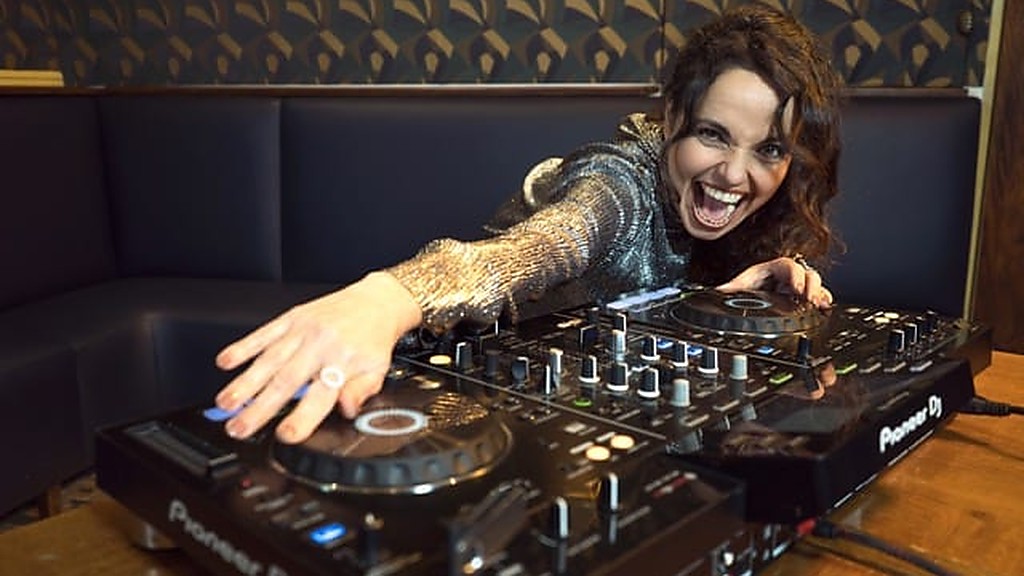
A reasonable budget for a wedding DJ in France starts at 2,500 euros, for a seven hour package, from six in the evening to one in the morning for example, not counting setup and breakdown time. That minimum covers a full evening of live singing during the cocktail hour, a background playlist through dinner, and DJ mixing for the dance floor, delivered by one musician who also handles sound, light, and the entire timeline of the night. Anything above that adds musicians, equipment, or hours, not a different kind of service.
What Is a Reasonable Budget for a Wedding DJ in France?
Couples researching this question are usually comparing quotes that seem to vary wildly for what looks, on paper, like the same thing: someone playing music at a wedding. The truth is that a serious quote at 2,500 euros and a serious quote at 12,000 euros are not the same product. One is a single artist covering the whole evening. The other is a small orchestra. Neither is overpriced. What matters is understanding what a given number actually buys, and how wedding music is priced across every format is the place to start.
At the lower end, a solo performer working as both singer and DJ can deliver a full, professional evening. That is not a compromise. It is a specific, well built format, and for many couples it is exactly right.
What Does That Minimum Budget Actually Include?
At 2,500 euros, here is what a couple gets, at least in the format I offer myself. The package covers seven hours of performance, for instance from six in the evening to one in the morning, with setup and breakdown time counted separately. During the cocktail hour, I sing live across two sets of 45 minutes, with a repertoire drawn from jazz and international and French variety, accompanied by backing tracks. Through dinner, I switch to a curated background playlist, so the room has music without needing a live set at that point in the evening. Once dinner ends, I move into DJ mixing for the dance floor, and I stay there for the rest of the night.
The sound and lighting included at this level are sized for a specific kind of venue: a 500 watt sound system and lighting focused on the dance floor itself, rather than the whole room. That setup suits a space of up to 80 square meters, with a standard ceiling height of up to 3 meters, and up to 80 guests. For anything larger, the right equipment is available, but it comes with a supplement.
That price also includes my presence on site well beyond the hours guests actually see: two hours before the event starts, for setup, and one hour after it ends, for breakdown. It includes the preparation that happens long before the wedding day itself: planning the timing with the couple, choosing the sung and mixed repertoire together, and bringing my own experience and judgment to that conversation. Couples decide what they want to hear. I bring the expertise to help them get there.
From that base, the price moves up with the number of guests, the venue, the length of the evening, and the equipment required. For a closer look at what a solo DJ format looks like on the day, see the wedding DJ page, or tell me about your evening and I will price it properly.
What Happens When Couples Underestimate the Time Involved?
One of the most common mistakes I see in wedding budgets has nothing to do with the music itself. It is timing. Couples often plan an evening that runs, say, from six in the evening to one in the morning, and assume that represents seven hours of work. In practice, that same evening takes at least twelve hours once setup, breakdown, and travel are factored in.
This matters for budgeting because a quote is never just for the hours guests see on the dance floor. It also needs to account for meals for the musicians, transport both ways, and sometimes accommodation, depending on distance and how late the evening runs. A couple who forgets this at the budgeting stage is often surprised later by a supplement they had not planned for. Building it in from the start avoids that surprise entirely.
Is There a Real Difference Between a DJ and a DJ-Live Experience?
Yes, and the difference is not subtle, which is why it gets an article of its own. A DJ alone plays recorded music. In a DJ-Live format, Nourith sings live, joined by a DJ, other singers, saxophone and percussion, and the difference in atmosphere is significant. At its fullest, this kind of lineup can include up to seven people on stage: a DJ, two female singers, two male singers, a saxophonist, and a percussionist. That is not an accompanied DJ set. It is a live orchestra built around the dance floor.
Couples do not have to choose between the two extremes. A DJ can be paired with just a saxophonist, or with one or two singers added, depending on budget, the size of the room, the number of guests, and the character the couple wants for their party. The price scales with how many musicians join the DJ, which is exactly why a "DJ budget" can range so widely between quotes. To see how a fuller live lineup compares to a solo DJ format, explore the live wedding band page.
Does the Guest Count Change the Price?
It does, though not simply because more guests means a bigger bill. A wedding for 50 people and a wedding for 200 people usually call for different equipment, not just a different fee. Larger guest counts generally mean a bigger room, which needs more powerful sound and, often, additional speakers placed around the space so the sound reaches everyone evenly. Beyond 80 guests or an 80 square meter room, the entry level setup is no longer enough, and a stronger system comes with an additional cost.
There is a detail here that surprises most couples: in a large room, more speakers usually make the sound feel less loud and less aggressive, not more, because the sound is distributed rather than pushed from a single source. It sounds counterintuitive, but it is simply how acoustics work in a big space. That distribution takes more equipment, which is part of why a 200 guest wedding costs more than a 50 guest wedding, beyond the obvious difference in scale.
Tell me your venue and guest count and I will tell you what it needs.
What Increases the Budget From There?
Once a couple moves past the minimum, the budget grows with the richness of the evening they want. For the cocktail hour, that might mean a trio or a quartet of musicians instead of a solo performance. For the dance floor, it might mean building toward the full DJ-Live format described above. Sound and lighting can also expand, with lighting designed not just for the stage but for the room itself, to create a warmer, more atmospheric evening for guests.
Couples with a tighter budget are not left with a lesser version of the same idea. They are offered the format that fits: for the most limited budgets, that is usually the solo singer and DJ format. As the budget grows, so does the number of musicians and the depth of the evening. For a full sense of what different formats look and sound like, visit the wedding experiences page.
Frequently Asked Questions
Is 2,500 euros enough for a wedding DJ in France?
Yes, for a solo singer and DJ format covering seven hours of performance, including sound, light, and preparation time. It is sized for a room of up to 80 square meters and 80 guests, and will not include additional musicians or a fuller live band lineup.
Why do DJ quotes vary so much between musicians?
Because "DJ" can mean very different things: a single person mixing recorded music, or a full live lineup with singers and instrumentalists joining the DJ. The price reflects how many people are actually performing.
Does a bigger wedding always cost more for the DJ?
Usually, yes, mainly because larger rooms need more powerful sound equipment to cover the space evenly, not simply because there are more guests.
What is often left out of a wedding DJ budget?
Setup and breakdown time, musician meals, transport, and sometimes accommodation. A six hour evening can represent twelve hours of actual work.
In Practice
A reasonable wedding DJ budget in France starts at 2,500 euros and grows from there, based on the number of musicians involved, the venue, and the length of the evening. Understanding what sits behind that number, rather than comparing it in isolation, makes it far easier to choose the right format for your day.