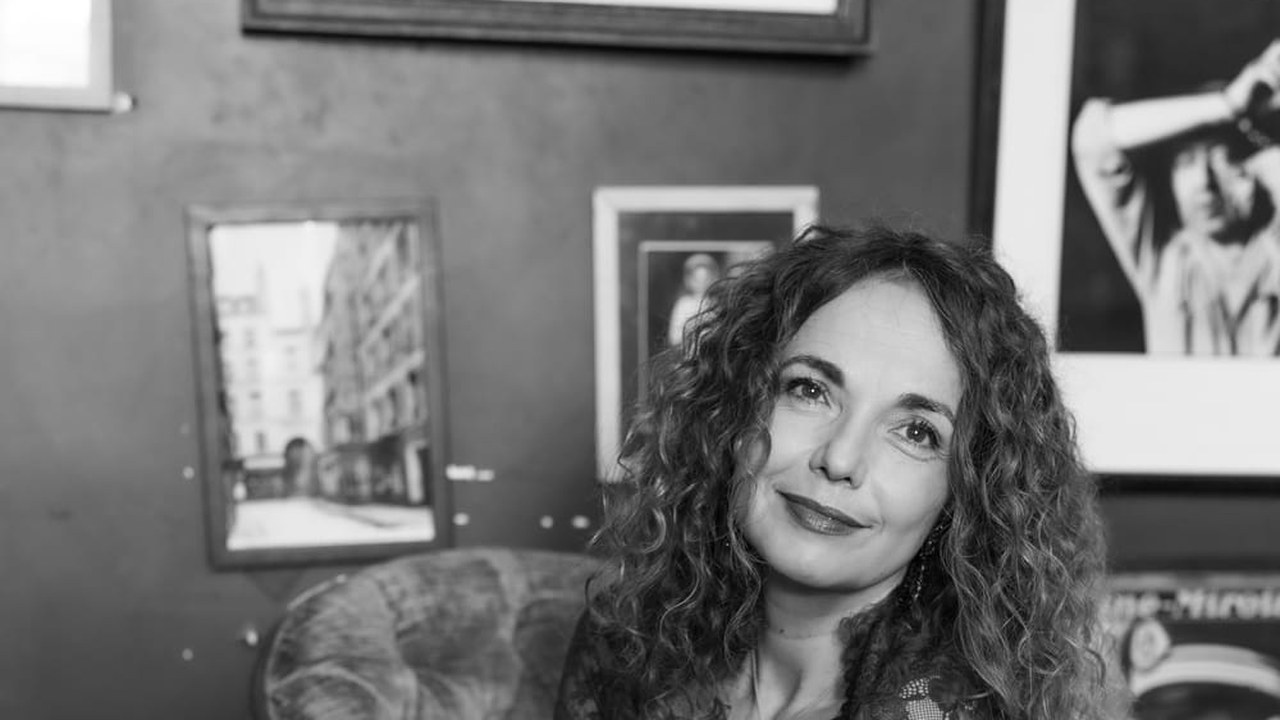
A live musician for a wedding ceremony in France typically costs 600 to 1,000 euros per musician, covering travel, performance, and sound equipment, since most bring their own setup. My own ceremony trio starts at 2,500 euros, which sits right inside that range per musician, and I start at 1,500 euros when I sing alone. A chuppah sung in Hebrew starts at 2,000 euros when I sing alone, and 3,000 euros with a trio. A small ensemble always multiplies the cost, since the price scales with the number of musicians.
How Much Does a Live Musician Cost for a Wedding Ceremony?
Ceremony music is often the part of a wedding budget couples think about last, after the reception format is already decided. That is a mistake, because the ceremony is where the emotional weight of the day actually lands, and the music carries a large part of that weight.
The market rate of 600 to 1,000 euros per musician includes several things that are easy to overlook when comparing quotes: travel to the venue, the performance itself, and sound equipment, since most musicians who perform ceremonies are self sufficient and bring their own sound system rather than relying on the venue. From there, couples have a genuine choice of format. A single soloist, a singer performing over a backing track, a violinist, or a saxophonist, sits at the base of that range. A small ensemble, such as a trio of a singer, double bass, and guitar, sits higher, since the price scales with the number of musicians involved.
When a quote sits above that range, the reason is rarely the number of songs. It is who is singing them. A ceremony is sung once, with no second take, in front of the people who matter most to you, and an artist with a real stage career brings a different level of control to that moment. My own ceremony formats and what they include are laid out on the experiences page, and for how ceremony music fits into the rest of the day's budget, see how much wedding music costs in France.
What Actually Shapes the Price?
The core variables are the same ones that shape any live music quote: how many musicians are performing, whether they bring their own sound equipment, how far they need to travel, and how long they stay on site before and after the ceremony itself. A soloist working with a backing track is the simplest and least expensive setup. A trio, with real instruments and voices working together, costs more, both because there are more people involved and because the sound itself carries more depth.
What does not change dramatically, in my experience, is the emotional impact per euro spent. A well chosen singer, alone, can move a room as much as a larger ensemble, if the voice and the song are right. The format is a budget decision. The quality of the interpretation is a separate one entirely, and it matters more.
Tell me about your ceremony and I will tell you which format fits it.
What Repertoire Is Typically Offered for a Ceremony?
Ceremony repertoire is different from reception repertoire, and more specific. Most musicians who specialize in this part of the day offer a curated list of love songs, generally in English and French, and couples choose from that list to build a ceremony that feels genuinely their own. No two ceremonies end up sounding the same, even when they draw from a similar pool of songs, because the choices, and the order they come in, are always personal to the couple.
To give a sense of the range rather than a fixed script, a few songs I return to often, and that tend to work beautifully at certain moments, include "Can't Help Falling in Love with You," which suits an entrance with real warmth, "At Last," which carries weight for a bride's entrance, "Stand By Me," which fits a moment of commitment such as a signature, and "L-O-V-E," which brings a natural lift to an exit. These are starting points for a conversation, not a template. Every couple I work with chooses differently, based on what a song means to them, not on what came before. If you are still deciding what the ceremony should sound like, the page on wedding ceremony music in France covers the practical side, from the officiant's microphone to a processional that runs long.
Why Does Emotion Matter More Than Format?
If there is one thing I would tell a couple choosing ceremony music, it is this: prioritize the voice. In my view, the voice is the instrument that carries the most emotion, more than any other, but the choice of singer matters just as much as the choice to have a singer at all.
A saxophone brings something different: it is jazzy, light, sometimes powerful and virtuosic, but it is not naturally an emotional instrument in the way a voice is. A violin can be, but it depends heavily on the repertoire chosen and on the violinist themselves. It is not automatic.
Emotion in a ceremony comes from many sources at once: the situation itself, the words spoken, the person officiating. But music carries a real share of that responsibility, and it is not something every performer can deliver. Technical skill is not the same as the ability to transmit real emotion through a song, and that distinction matters more in a ceremony than almost anywhere else in a wedding.
What Is the Structure of a Typical Ceremony, Musically?
Across most ceremonies, live musicians follow a similar structure, though the specific key moments differ depending on whether the ceremony is civil, religious, or a Jewish chuppah. Music typically opens the ceremony, played as guests arrive and take their seats. From there, four to six pieces mark the key moments of the ceremony itself. Once the ceremony ends, music accompanies the congratulations that follow, as guests come forward to embrace the couple.
For a civil, international ceremony, the key moments are generally: the entrance of the groom or the wedding party, the entrance of the bride, a piece after or between speeches, a piece following the exchange of vows, and music for the exit of the newly married couple.
How Is Music Structured Differently for a Jewish Ceremony?
A chuppah follows its own structure, and it is one I perform often, since Hebrew is my native language and singing in it is a specific skill this ceremony requires. The moments are: the entrance of the groom and his procession, the entrance of the bride, the exchange of rings, the signing of the ketubah, the moment before the breaking of the glass, the moment after it, and the celebration that follows.
I offer around fifteen songs I know well for this part of a wedding, chosen deliberately for the spirituality, emotion, and vocal depth they bring. The lyrics are matched carefully to each key moment, so the words carry real meaning at the point in the ceremony where they are sung. Couples often do not understand the Hebrew text themselves, so part of my role is guiding them toward the song whose words actually suit the moment they are marking. These are generally not songs with explicitly religious text, since the chuppah ceremony already contains its own prayers and structured religious content. The purpose of the songs is different: to bring the beauty of Israeli music, some of it drawing on biblical texts, without duplicating the ceremony's religious core. This is exactly why it matters to work with a singer who understands what she is singing under the chuppah, and who can bring genuine emotion to a moment that will not happen again.
One memory stands out clearly for me here. During one chuppah, I sang "Yerushalayim Shel Zahav." I recorded my own arrangement and interpretation of that song on an album produced by Universal, and it is a piece Jewish families know by heart, wherever they live. With that particular arrangement, the song takes on real scale. I have seen people in the room moved to tears while I sang it, more than once.
Here is how I typically structure the music through a chuppah, song by song. For the entrance of the groom, "Bereshit Olam" by Shlomi Shabat. For the entrance of the bride, "Boi Beshalom," inspired by "Con Te Partiro" by Andrea Bocelli. For the exchange of rings, "Ein Od Milvado" by Shlomi Shabat. For the signing of the ketubah, "Lechol Echad" by Shlomi Shabat. Before the breaking of the glass, "Yerushalayim Shel Zahav" by Naomi Shemer. After the glass is broken, a medley of celebratory songs: "Hava Nagila," "Siman Tov U Mazal Tov," "Sameach," "Yismechu Hashamayim," "Yevarechecha," among others. Each of these moments is explained in more detail in the music of a chuppah, moment by moment.
Ask me about the songs for your chuppah.
Can Couples Request a Song Outside the List?
This comes up regularly, and the honest answer is that it rarely happens. The songs I have chosen for my repertoire suit my voice, are pieces I genuinely enjoy singing, and are frequently requested across many different couples, which is exactly why they have earned their place on the list. Learning a new song properly takes real time and work, both for me as the interpreter and for the musicians accompanying me.
In practice, this has never actually happened for me: a couple insisting on a song entirely outside the list, that we then built together as a group. It remains a theoretical exception rather than something I have needed to do, precisely because the existing repertoire, refined over many ceremonies, already covers what most couples are looking for.
How Should Couples Choose Between a Soloist and a Trio?
The choice between a single musician and a fuller ensemble comes down to a few honest questions. Budget comes first, since a trio naturally costs more than a soloist. Beyond budget, there is a real difference in emotional depth between a singer accompanied by live instruments and one performing over a backing track. Live accompaniment tends to bring more emotion to the moment, but that requires both the physical space for musicians and the budget to support it.
That said, backing tracks are not a compromise by default. A well produced track, paired with a strong voice, can also be genuinely excellent. The format is a budget and logistics decision. The quality of the performance itself depends on the musicians involved, not on whether the accompaniment is live or recorded.
Frequently Asked Questions
How much should I budget for ceremony music at my wedding?
Expect 600 to 1,000 euros per musician, covering travel, performance, and sound equipment. My ceremony trio starts at 2,500 euros, inside that range per musician, and I start at 1,500 euros alone. A chuppah starts at 2,000 euros when I sing alone, and 3,000 euros with a trio.
Why does a chuppah cost more than a civil ceremony?
Because singing a chuppah in Hebrew is a craft of its own rather than a repertoire choice. It asks for a native command of the language, an understanding of what each text means at each moment, and songs that complement the ceremony's prayers without repeating them.
Is a singer better than an instrumentalist for a wedding ceremony?
In most cases, yes, since the voice tends to carry more emotion than an instrument. A saxophone brings lightness and virtuosity rather than deep emotion, while a violin can move a room, depending heavily on the repertoire and the violinist.
Can I request a song that is not on the musician's list?
It is possible in principle, but rare in practice, since a curated repertoire has usually already been refined across many ceremonies to suit both the singer's voice and what genuinely works in that moment.
What is different about music for a Jewish chuppah?
A chuppah follows its own sequence of key moments, from the entrance of the groom to the breaking of the glass, and requires a singer able to perform in Hebrew with real understanding of the lyrics and their meaning.
In Practice
Ceremony music is a smaller line in the wedding budget than the reception, but its impact on the moment itself is disproportionate. Whether you choose a soloist or a fuller ensemble, what matters most is a performer who can bring genuine emotion to a moment your guests, and you, will remember for years.
Talk to Nourith about music for your ceremony.