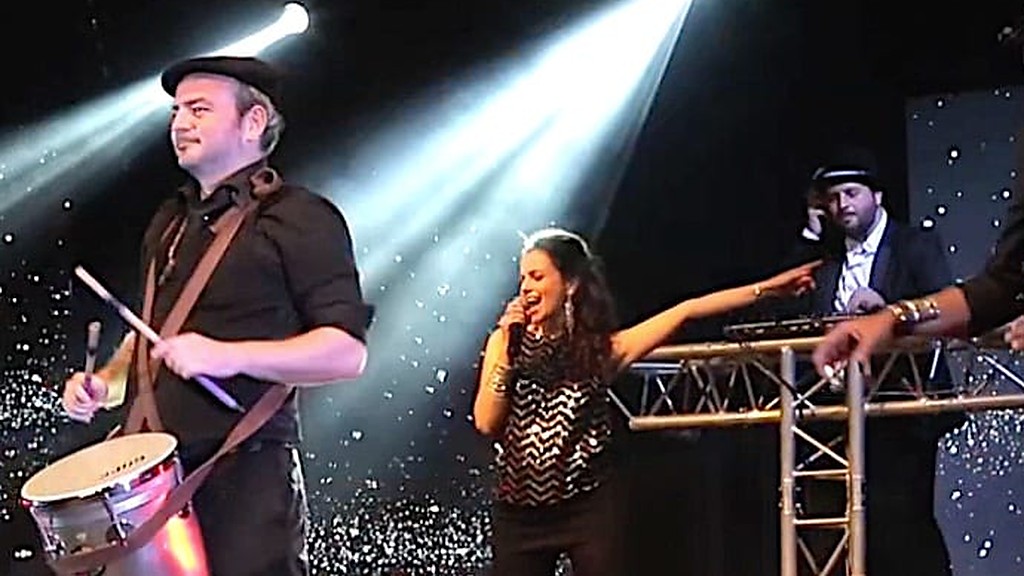
A wedding DJ package typically includes four things: travel to the venue, hours of presence on site, preparation time before the event, and the sound and lighting equipment itself. In France, a DJ alone for a wedding usually starts around 2,500 euros. My own evenings start at that same figure and include live singing through the cocktail, which is why two quotes at the same price can buy very different evenings. From there, the price moves with distance, duration, and the size of the venue.
What Is Included in a DJ Package for a Wedding?
Couples comparing DJ quotes are often confused by how different the numbers look for what seems, on the surface, like the same service. The truth is that a quote is built from several separate components, and understanding each one makes it much easier to compare offers fairly, rather than simply picking the lowest number.
A DJ quote is never just a number attached to a few hours of mixing. It reflects travel, the hours actually spent on site, the preparation done before anyone arrives, the equipment suited to the venue, and the DJ's own experience. Each of these adds up differently depending on the wedding, which is exactly why two quotes for what looks like the same evening can sit so far apart. For the full picture across every format, from a solo voice to a live band, see what wedding music costs in France.
Travel: More Than Just Distance
Travel is usually the first variable in a quote. Pricing is not the same whether a DJ works within a 50 kilometer radius of home or travels much further. Some events require an overnight stay, which raises the cost further. Travel costs generally include both time and transport expenses, and when an overnight stay is involved, meal costs during the trip are often factored in as well.
For couples planning a destination wedding in France from abroad, this detail matters more than it might seem. A DJ based near the venue will almost always cost less than one traveling several hours, simply because of what travel adds to the base price, independent of the quality of the performance itself.
How Many Hours Does a DJ Actually Work?
A wedding DJ's presence usually starts well before guests notice any music. Setup typically begins two hours before dinner starts, since equipment needs to be in place while guests are still arriving. In some events, the DJ plays briefly just before dinner, then waits through the meal itself, which can run anywhere from an hour and a half to three hours. During that time, the sound system is often used for speeches and any entertainment planned for the meal. Music usually returns to accompany the arrival of the wedding cake, and from there the DJ mixes for the dance floor, typically for up to three hours.
Without an after party, this adds up to roughly eight hours on site. An after party extends that by another two to three hours, and can be handled either by the same DJ or by a second, club oriented DJ, depending on what the couple wants for that later part of the night.
Ask about timing for your own reception.
Should You Keep the Same DJ for the After Party, or Bring in Someone Else?
This is a question that depends entirely on what a couple wants from that part of the evening. As a wedding DJ, I work as a generalist, mixing a broad range of music that suits a mixed, multigenerational crowd. I can absolutely continue mixing through an after party, but if a couple is picturing a genuine clubbing atmosphere, that specific style is not where my strength lies.
There are two honest paths here. The first is for the couple to hand me the full list of clubbing tracks they want, which I can then source and mix without any issue. The advantage is cost, since I am already on site and no second provider is needed. The trade off is that the couple will already know exactly what to expect, since the set is built entirely from music they already chose. The second option is to bring in a DJ who specializes in clubbing music. That choice tends to deliver more surprise and a more authentic club atmosphere, but it costs more, since it means adding a second provider to the evening rather than extending the one already booked.
What Does Preparation Actually Involve?
Preparation is a part of the price that couples rarely think about, but it takes real time. Some DJs ask clients to fill out a musical questionnaire. My own approach is simpler: I ask for a list of 20 to 40 tracks that matter most to the couple, and I always take that list into account. Preparation means checking that every one of those tracks is already in my library, and if not, sourcing and downloading them, making sure each file is high quality so the sound on the night is clean. This can take anywhere from thirty minutes to several hours, depending on the list.
That list matters for another reason too. It tells me what a couple's musical taste actually looks like, and how to build an evening they will enjoy. But I never simply play through it in order. It gives me a direction, not a script. I use as many of the requested titles as I can, while also reading the room as the night goes on: the type of crowd, their age, their energy, how they respond to certain songs. There is always a degree of improvisation involved, because couples, however clear their own taste is, rarely have the experience needed to sense what an entire room of guests will respond to. What they love personally is not always what gets everyone dancing. The songs that do tend to fill a floor are covered in the songs that open a dancefloor, and the ones that keep it.
When Requests Take Longer Than Expected
Some requests take considerably more preparation time than others. Couples sometimes ask for songs tied to their heritage: tracks in Arabic, Portuguese, folk music, Mexican or Indian repertoire, among others. When that happens, finding the exact right version matters. The most reliable way to do this is to ask the couple for a Deezer or Spotify playlist, or even direct YouTube links, so there is no risk of using the wrong version of a song they care about. Beyond simply sourcing the track, I also spend time actually listening to it, so I can place it well and integrate it smoothly into the set, rather than dropping it in blind.
There is also a category of songs that matter enormously to a couple personally, without being widely known. These deserve a place in the evening, but not too large a place: playing too many niche, unfamiliar tracks back to back can lose a room rather than move it. The right approach is usually to place a few of these meaningful songs at specific moments, as a gesture to the couple, while keeping the broader set built around music the whole room will respond to. These are exactly the kinds of tracks that are rarely already in my library, so they take longer to find, download, and properly listen to before the event.
Send your song list and we will build your set together.
Why Equipment Changes the Price So Much
Equipment is often the single biggest factor behind price differences between quotes. For an intimate reception, in a room of up to 80 square meters with a standard ceiling height and up to 80 guests, a 500 watt system with lighting focused on the dance floor is generally sufficient, and in my own pricing, this level of equipment is included from the start. Larger receptions call for more powerful setups, sometimes several speakers reaching up to 1,500 watts, along with raised lighting structures for the stage and dance floor, and lighting for the room itself to create a warmer atmosphere. This kind of setup sometimes requires technicians to install and run it, which is also reflected in the price.
This is why it matters, when contacting a DJ, to share the number of guests, the size of the room, and the ceiling height, so equipment can be assessed accurately and included properly in the quote. What that entry level setup covers, hour by hour, is detailed in a reasonable budget for a wedding DJ in France.
Why One Room Is Rarely Enough
The same logic applies when live musicians are booked alongside a DJ for the cocktail hour or dinner. Each space used during the evening generally needs its own sound kit, and sometimes its own lighting. A cocktail hour rarely happens in the same room as dinner, which means an additional kit is needed for that part of the day. In some chateaux, dinner and the dance floor even take place in separate rooms, which calls for a dinner kit and a stronger kit for the dance floor. Sound simply does not travel well through walls and obstacles between rooms, so each space needs to be treated on its own terms. The cocktail part of the day has a page of its own.
There is also a practical detail worth planning for: weather. In France, conditions can change quickly. A cocktail set up indoors, based on the safer bet for the day, can suddenly need outdoor speakers if guests decide to step outside once the sun comes out. It is often too late to move the entire setup by that point, but small outdoor speakers can make sure the music still reaches everyone, wherever they end up standing.
What About the DJ's Own Experience?
Finally, part of what you pay for is the DJ's own experience and reputation. Well known club DJs who charge several thousand euros for a single set have usually built that reputation through years of specialization in a specific style, house, techno, deep house, afro, and often, crucially, through their own productions. Names like David Guetta, Avicii, or Bob Sinclar built global recognition largely because they produced their own tracks, not only because they performed well behind the decks. Reaching that level of international fame is genuinely rare, but even a more modest catalogue of original productions can bring enough recognition to justify a fee of several thousand euros. That reputation then opens doors to festivals, residencies, and brand sponsorships, each of which reinforces the next, building a career quite different from that of a wedding DJ.
A wedding DJ operates in a different world entirely, built around versatility across genres and generations rather than a signature club sound. Within the private event market in France, a DJ alone for a wedding generally starts around 2,500 euros, and moves upward from there based on all the factors described above. My own evenings start at that same 2,500 euros, and I sing live through the cocktail before moving to the decks, so the two are worth comparing on what happens in the room rather than on price. You can see how each format compares.
In Practice
A DJ package is never just about the hours on the dance floor. It covers travel, preparation, equipment suited to your venue, and the judgment that comes with real experience reading a room. Knowing what sits behind a quote, from the sourcing of a single meaningful song to the number of sound kits your venue actually needs, makes it far easier to compare offers, and to ask the right questions before you book.
Talk to Nourith about your wedding DJ setup.